


Installation and bonding
Hair system front lifting? 7 checks before rebonding
Check residue, skin preparation, adhesive and base tension before adding more product.
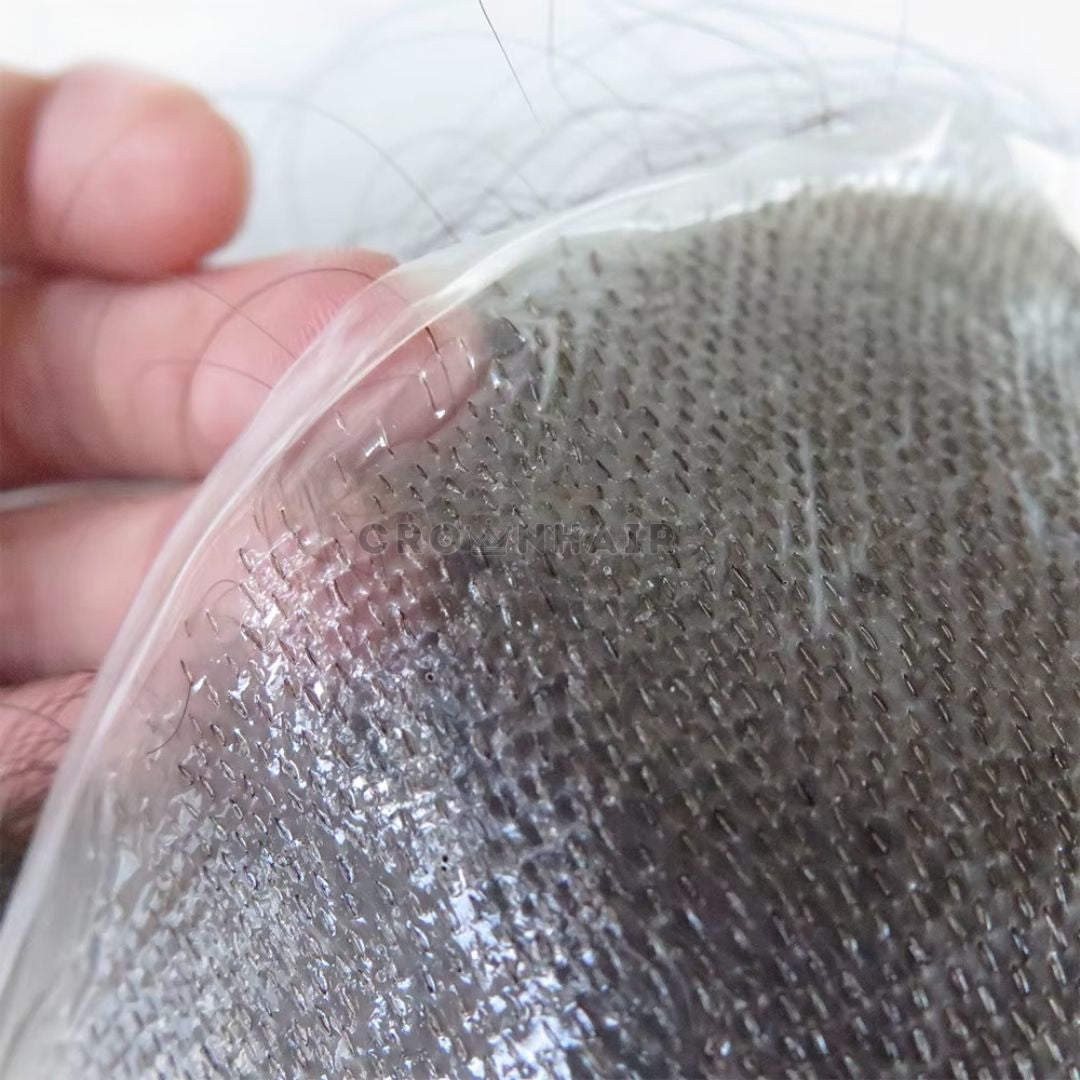
Adding more adhesive is not always the answer to a lifting front. First identify where the skin, adhesive and base separate. Residue, moisture, an unsuitable product and excessive tension can all cause a similar problem.
Note when it happens: immediately after application, after a shower or several days later. That context is more useful than the adhesive name alone.
1. Check for residue
An apparently clean edge may still carry tape, adhesive, remover or styling products. A new bond over residue starts on an uneven surface. Inspect both the base and the skin without pulling the hair to lift the edge.
Use products suitable for the material and complete cleaning, any required rinsing and drying as directed. Do not scrub a thin membrane or scrape lace. Follow the hair system maintenance guide to plan the process.
2. Prepare the skin
Sweat, oil, creams and moisture may interfere with contact. Apply only to intact, clean, dry skin and follow the bonding product's instructions. If you are still sweating after exercise or a hot shower, wait until the surface is dry and stable.
Stop using a suspected product if burning, persistent itching or skin damage occurs, and seek healthcare advice. CrownHair can help review the application process; technical support cannot diagnose a skin reaction.
3. Match the adhesive to the front material
PU and lace provide different contact surfaces. PU is a membrane; lace is a mesh. Compatibility with one does not automatically mean compatibility with every base. With a hybrid system, identify the material in the area that is lifting.
Application needs to avoid excess product and unwanted seepage through mesh. Check the product instructions and our installation guide. A tape such as Walker Tape Ultra Hold also needs to suit the base and your routine. A commercial product name is not a guarantee of wear time.
4. Follow application and curing instructions
A thicker layer does not necessarily hold better. It can dry unevenly and leave an unstable edge. Follow the manufacturer's quantities and intervals when an adhesive requires several layers.
The point at which the surfaces can be joined is not necessarily the point at which the bond can tolerate water or heavy perspiration. There is no universal waiting time for all tapes and liquid adhesives.
5. Check base tension
If you need to stretch the system to reach the bonding area, check its measurements, position and curvature. A forced fit can keep pulling on the edge. Position and press as instructed without stretching the material.
Repeated lifting in the same place calls for a fit assessment. Our measurement guide can help you compare an existing system with the area it needs to cover.
6. Review everyday friction
Helmets, headbands, tightly pulled hairstyles, rubbing and perspiration can concentrate stress at the front. Note what happens before lifting begins. Avoid repeatedly raising the edge to test it: that action can itself disturb the bond.
7. Inspect the base condition
A persistent crease, tear or distorted edge needs a different assessment from simply changing adhesive. Do not cover damage with increasing amounts of glue. Photograph the dry area without pulling it, and record the material, products and maintenance frequency. Any repair depends on the system's condition and technical feasibility.
Your support checklist
- Does lifting affect the centre, temples or entire front?
- How soon does it happen, and after which activity?
- Which base, adhesive and remover are involved?
- Does it recur after a complete clean?
- Are there creases, damage or skin symptoms?
Common questions
Can I touch up only the lifted spot?
Some bonding routines allow touch-ups, but surfaces still need the correct preparation. Adding adhesive over residue or irritated skin does not address the cause.
Should I immediately choose a stronger adhesive?
Check preparation, compatibility and tension first. Stronger hold will not correct a poorly positioned base. If lifting recurs, send the checklist to our Italian support team for a focused technical assessment.
Information about choosing and caring for hair systems. Contact CrownHair support for advice on your individual configuration.